|
Technical Session 2 "Sensing Technologies for Present Insight and Future Foresight"
Chairperson: Prof. Dr. Atsushi Matsubara(Setsunan University)
Co-Chairperson:Dr. Yasuhiko Suzuki(YAMAZAKI MAZAK Corp.)
|
| 13:00-13:10 |
Introduction by Chairperson |
| 13:10-13:40 |
【Speech】
"From Data-Driven Manufacturing to Autonomous Manufacturing Cells"
Prof. Dr. Friedrich Bleicher (Technische Universität Wien, Head of the Institute of Production Engineering and Photonic Technologies)
The increasing availability of sensor data and advances in communication technologies enable the development of manufacturing systems with enhanced process monitoring, adaptive control, and higher levels of automation. This presentation summarizes current research activities at the Institute of Production Engineering and Photonic Technologies, TU Wien, addressing the transition from data-driven manufacturing towards autonomous manufacturing cells.
The presented overview focuses on the integration of sensor systems, machine tool communication, digital twins, edge computing, and manufacturing data spaces for machining applications. Particular emphasis is placed on high-performance cutting processes, where process monitoring and data-driven control strategies are employed to improve process stability and support the economical use of cutting tools when operating close to technological and stability limits. The objective is to increase machine utilization by reducing unplanned interruptions and enabling reliable unattended machining.
Several research examples are presented, including sensor-integrated cutting tools for in-process condition monitoring, intelligent workholding systems with integrated sensing and communication capabilities, automated in-machine surface roughness measurement, and 5G-enabled communication infrastructures for distributed manufacturing systems. Standardized interfaces such as OPC UA and manufacturing data spaces enable interoperable data exchange between digital services and provide the basis for the development of algorithms using Physical AI, Explainable AI, and federated learning to support closed-loop process monitoring and adaptive control.
The transition from isolated data acquisition to closed-loop manufacturing systems demonstrates how the integration of sensing, communication, and data analysis improves process robustness, productivity, and resource efficiency, providing the technological basis for autonomous manufacturing systems.
|
|
| 13:40-14:10 |
【Speech】
"Monitoring using sensing devices applicable to production sites"
Mr. Kengo Yamamoto (YAMAMOTO METAL TECHNOS Co.,Ltd., President & CEO)
Manufacturing sites have faced challenges such as production line stoppages, quality deterioration caused by machining troubles, and the need for energy-saving initiatives. Although sensor technologies have made it possible to quantify these conditions, difficulties in interpreting the data and feeding it back to the shop floor often prevent effective improvements. We would like to introduce our approach to addressing these challenges.
We have developed sensing devices that enable real-time monitoring of machining conditions. Furthermore, by integrating sensor data with internal machine information, such as coordinating values from machine tools and robot control systems, we have established a method to visualize "what phenomenon occurred, during which operation, and at what position."
This makes it possible to utilize acquired data not only for machining improvements but also for optimization across upstream and downstream production processes. Currently, we are deploying these capabilities in a smart factory that implements adaptive control based on threshold values and links quality information with machining data via individual identification numbers, with a future vision of leveraging visualization of machining phenomena for quality assurance. Furthermore, by connecting robotics with data, we are pursuing initiatives aimed at creating new added value throughout the entire production line.
|
 |
| 14:10-14:40 |
【Speech】
"Monitoring research cases for cutting process by using PC-based CNC"
Mr. Toshimitsu Kawano(Beckhoff Automation K.K., Managing Director)
Most CNC systems in machine tools are black box systems, which makes accurately monitoring cutting processes difficult. Therefore, it is impossible to conduct cutting-edge research on machining or develop advanced technologies with conventional CNC systems. Thus, using PC-based CNC systems, which allow for flexible control implementation, are proposed. This approach enables high-speed sampling of sensor signals, analysis of data using computational libraries, and integration of custom control logic. This presentation will introduce cutting force and vibration monitoring research for small-diameter end mill machining as an example of machine tool research using this open CNC system. Specifically, high-speed sampling at 50 kHz is performed using an acceleration sensor mounted on the tool spindle, and monitoring is carried out by analyzing the sensor signals on the CNC. Machine learning is used for modeling to estimate cutting forces, and this methodology will also be presented.
|
 |
| 14:40-15:10 |
【Speech】
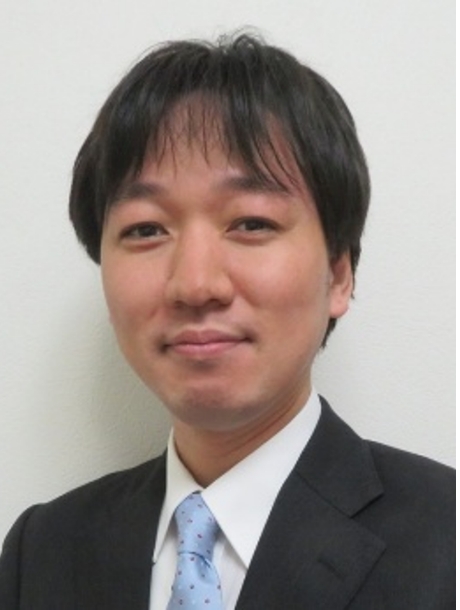
"Process-Data-Based Build Control and Quality Traceability in Wire-Laser Metal Additive Manufacturing"
Dr. Nobuyuki Sumi (Mitsubishi Electric Corporation, Power Laser Solution Design Section 2, Laser Systems Department, Industrial Mechatronics Systems Works, Senior Manager)
The industrial application of metal additive manufacturing (AM) requires not only stable, high-quality builds but also a quality assurance scheme that does not rely solely on post-build inspection.
This paper presents process-data-based build control and quality traceability in our wire-laser directed energy deposition (DED)-based metal AM system, the AZ series, by utilizing process data acquired during the build, including control commands, feedback signals, sensor readings, and images. In the AZ series, stable and high-quality builds are enabled by the “AM Process Control Function”, which coordinates axis motion, laser power, and wire feeding based on process data. In addition, the optional “Process Traceability System” (also referred to as the “AM Process Data Logging Function”) records process data in chronological order during the build, enabling post-build review and ensuring traceability of the build process.
Through these functions, the AZ series aims to achieve both quality enhancement based on in-process monitoring and traceability-based quality assurance, thereby supporting the industrial application of wire-laser metal AM.
|
 |
| 15:10-15:20 |
Q & A for Technical Session 2 |
| 15:20-15:40 |
Coffee break |
|
Technical Session 3 “Advanced Robot Machining Technologies for a New Era”
Chairperson: Prof. Emeritus, Dr. Keiichi Shirase(Kobe University)
Co-Chairperson:Mr.Soichiro Ide(FANAC Corp.)
|
| 15:40-15:50 |
Introduction by Chairperson |
| 15:50-16:20 |
【Speech】
"Trajectory Velocity Prediction and Compensation in Robot based Fluid-Jet Polishing of Optical Surfaces"
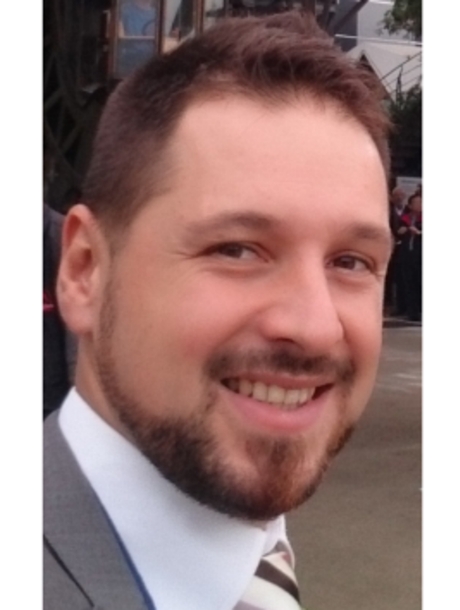
Assoc. Prof. Dr. Anthony Beaucamp(Keio University Associate Professor, Faculty of Science and Technology)
Fluid-jet polishing (FJP) is a sub-aperture finishing process in which the workpiece is impinged by a collimated jet generated by sending pressurized abrasive slurry through a laser drilled sapphire nozzle. The removal footprint diameter is small (0.5~2 millimeter) and locally removes workpiece material at the nanoscale level. It is a highly controllable process that can improve the form error (PV < 100 nm) and roughness (Ra < 2 nm) of optical surfaces to ultra-precision level when used on dedicated machine tools. This is achieved by scheduling the tool feed as the workpiece is rastered. Recently, we have been deploying FJP on 6-axis industrial robots. It has been found that the relatively low positional accuracy of robots (compared to machines tools) does not degrade the process performance. Indeed, the removal rate profile is not influenced by the stand-off distance between nozzle and workpiece. However, as the local depth of removed material is inversely proportional to the tool feed as it traverses the surface, the large discrepancy seen between commanded and actual tool feed has been found to be a major issue. In this speech, we introduce a recurrent neural network based system for predicting actual trajectory velocity from past and future move commands being fed to an industrial robot. To counter the predicted fluctuations in tool feed occurring near singularities and changes in trajectory direction, the material removal rate of the fluid jet polishing system (which cannot be changed instantly) is adjusted pre-emptively. The associated control system is based on identification of the line-packing and other non-linear effects taking place when the fluid pressure is adjusted. Uniform material removal on optical surfaces is demonstrated, even when operating the robot near a singularity.
|
 |
| 16:20-16:50 |
【Speech】
"Robot Machining and Expansion of Collaborative Robots and Physical AI"
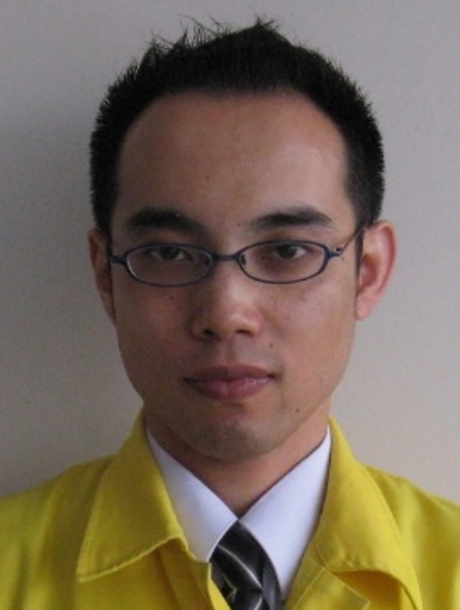
Dr. Masahiro Morioka(FANUC CORPORATION, Robot Research & Development Division, Robot Mechanical Research & Development Division, Chief Engineer)
With the increasing size of automotive components such as giga castings, there is a growing demand for more compact machining equipment. To meet this demand, full-scale machining using articulated robots, whose rigidity and absolute accuracy have been significantly improved compared to conventional robots, is gaining attention. By leveraging their six-axis high degree of freedom, robots can perform machining from multiple directions without changeovers, enabling machining process consolidation. In addition, they can machine large workpieces with a wide operating range despite their small footprint, contributing to more compact machining systems. In this presentation, we will introduce various machining applications using full-scale machining robots, including laser cutting, milling, and drilling. At the same time, manufacturing sites facing labor shortages require automation that can improve productivity with fewer personnel. As a solution, we will also present collaborative robots that can safely work alongside humans without safety fences and are easy to use even for beginners. Furthermore, we will introduce physical AI technologies that enable robots to “see, think, and act” like humans, allowing anyone to intuitively operate robots and automate tasks that previously required human skills.
|
 |
| 16:50-17:20 |
【Speech】
"Research and development of kinematics machine tools equipped with digital twins and real-time cutting resistance adaptive control functions"
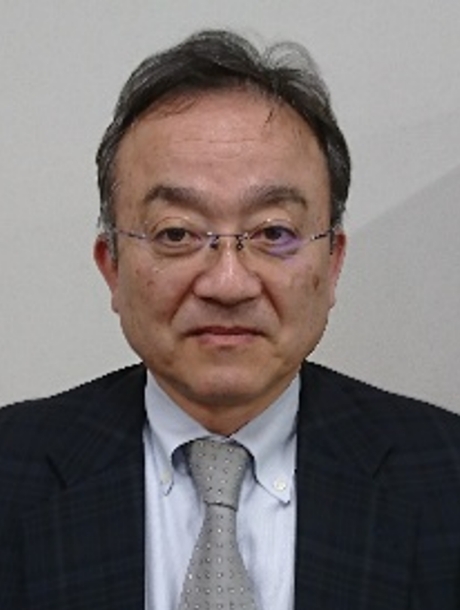
Prof. Dr. Yoshitaka Morimoto(Kanazawa Institute of Technology, Department of Advanced Mechanical Systems Engineering)
Kinematics machine tools have rigidity positioned between conventional machine tools and industrial robots for machining, and are said to have a wider range of motion and greater flexibility in tool posture compared to machine tools. Using Exechon's 5-axis kinematics machine tool, we realized digital-twin and established a method to calculate the cutting resistance on the workpiece coordinate system with a resolution of about 10N from the output torque values of the servo motors of each axis during machining. Based on this, we built a system that adjusts spindle speed in real time and controls cutting resistance below the target value.
By achieving digital twining, the machine tool posture can be expressed in cyberspace from the numerical control controller, and cutting resistance is predicted using the position of each axis and torque during machining via OPCUA. Various control methods were used to control spindle rotational speed based on the setting of target cutting resistance, and the effects were compared through actual machining. Here, we report on system configuration, cutting resistance estimation methods, and the effects of cutting resistance adaptive control.
|
 |
| 17:20-17:50 |
【Speech】
"Cutting Technologies for Robot Machining and Activities of the Robot Machining Technology Symposium"
Mr. Masanao Iwata(Iwata Tool Co., Ltd., President & CEO)
Industrial robot machining offers a wide working range and a high degree of flexibility, while cutting forces and vibration remain important challenges during machining. In this presentation, from the perspective of a cutting tool manufacturer with approximately ten years of experience in the practical implementation of robot machining, we will introduce approaches to reducing cutting forces and vibration, as well as their application to low-stiffness workpieces such as thin sheets and thin-walled components. We will also discuss how cutting technologies developed through robot machining are being applied to machine-tool machining, together with the activities of the Robot Machining Technology Symposium toward the practical implementation and wider adoption of robot machining.
|

|
| 17:50-18:00 |
Q & A for Technical session 3 |
- Registration Fee
*The following rates apply to participants from overseas only.
【Conference】
Conference 30,000 yen for one day 40,000 yen for two days per one person (including tax)
- If applying for three persons at the same time
If the three persons concerned are from the same organization and have the same participation pattern (one or two days), the participation fee for one of the three persons will be waived.
*This does not apply if one of the organizations or participation patterns is different (all participants will be charged).
*The first participant will receive an invoice for the number of people who applied.
【Proceedings】
One copy of the Proceedings is included per person.
Additional fee is 5,000 yen (included tax).
【Payment Information】
An invoice for the registration fee will be sent by our office at a later date. Please make the payment by bank transfer to the designated account indicated on the invoice.